
Garfield County Parole and Probation
Parole and probation both let a person live in the community under rules, but they begin in different ways. The Utah Board of Pardons and Parole may grant parole to a person serving a state prison sentence. The person leaves prison yet remains under that sentence. Adult Probation and Parole, commonly called AP&P, then supervises the parolee. Probation is imposed by a court. A probationer may have served some time in Garfield County Jail, but probation does not establish that the person was released from a Utah state prison.
The distinction changes where to verify the record. A parole order comes from the Board, while a probation judgment comes from the sentencing court. Current supervision may appear in the UDC Offender Search. A parolee result is proof of release from prison into supervision, not proof that the sentence ended. A probationer result shows community supervision, but it does not prove a prior prison stay.
| Point | Parole | Probation |
|---|---|---|
| Who orders it | Utah Board of Pardons and Parole | Sentencing court |
| What came first | A Utah prison sentence | A court judgment, sometimes with jail time |
| Who supervises | UDC Adult Probation and Parole | UDC Adult Probation and Parole when assigned |
| Best supporting record | Board decision and UDC legal status | Court docket and UDC legal status |
| End point | Termination or expiration of the sentence | Court discharge from probation |
- Parole
- Conditional release from prison while the state sentence continues.
- Probation
- Court-ordered supervision in the community.
- Discharge
- The legal end of supervision or the controlling sentence.
- Absconder
- A person alleged to have stopped complying with supervision or reporting requirements.
Verify Garfield County Supervision
Start with identity, not a county label alone. UDC accepts a name or UDC offender number. A name search requires at least one letter in the first and last names. Match the result with date of birth, offender number, sentencing court, case number, and other public fields. UDC limits the tool to people currently under its supervision, including inmates, parolees, and probationers. It excludes people awaiting trial or sentence in a county jail.
- Search the official UDC tool by offender number when known, or by first and last name.
- Read the legal-status field. “Parolee,” “probationer,” and “inmate” describe different states.
- Compare the sentencing court and case number with the Garfield County court record.
- For parole, search the Board's prior decision and note whether release, rehearing, or termination was ordered.
- Call AP&P to confirm which regional office holds the assignment and whether public status can be verified.
A negative result is not a discharge record. The name may be entered differently, the person may have completed supervision, or the case may belong only to the county system. The Garfield County released-inmate search describes the broader county, court, VINE, and records-request path. For a durable state history, request an existing status record from UDC under GRAMA.
Garfield County AP&P Offices
Garfield County has an unusual office-routing issue. The UDC Adult Probation and Parole office list names Garfield County in both the Richfield and Cedar City regional entries. The public page does not explain the overlap. A home address, case assignment, supervision plan, or internal boundary may control, so selecting an office from geography alone can send a request to the wrong desk. Give the person's full name and UDC number, if known, and ask which office owns the case. Staff may limit what can be disclosed, but the agency can route a status question.
Region 4, Richfield
Adult Probation and Parole Office
835 East 300 North, #500
Richfield, UT 84701
435-896-2770
Region 5, Cedar City
Adult Probation and Parole Office
181 East DL Sargent Drive, Suite B-101
Cedar City, UT 84721
435-586-5350
The successful capture of the official UDC AP&P directory shows both Garfield County listings.
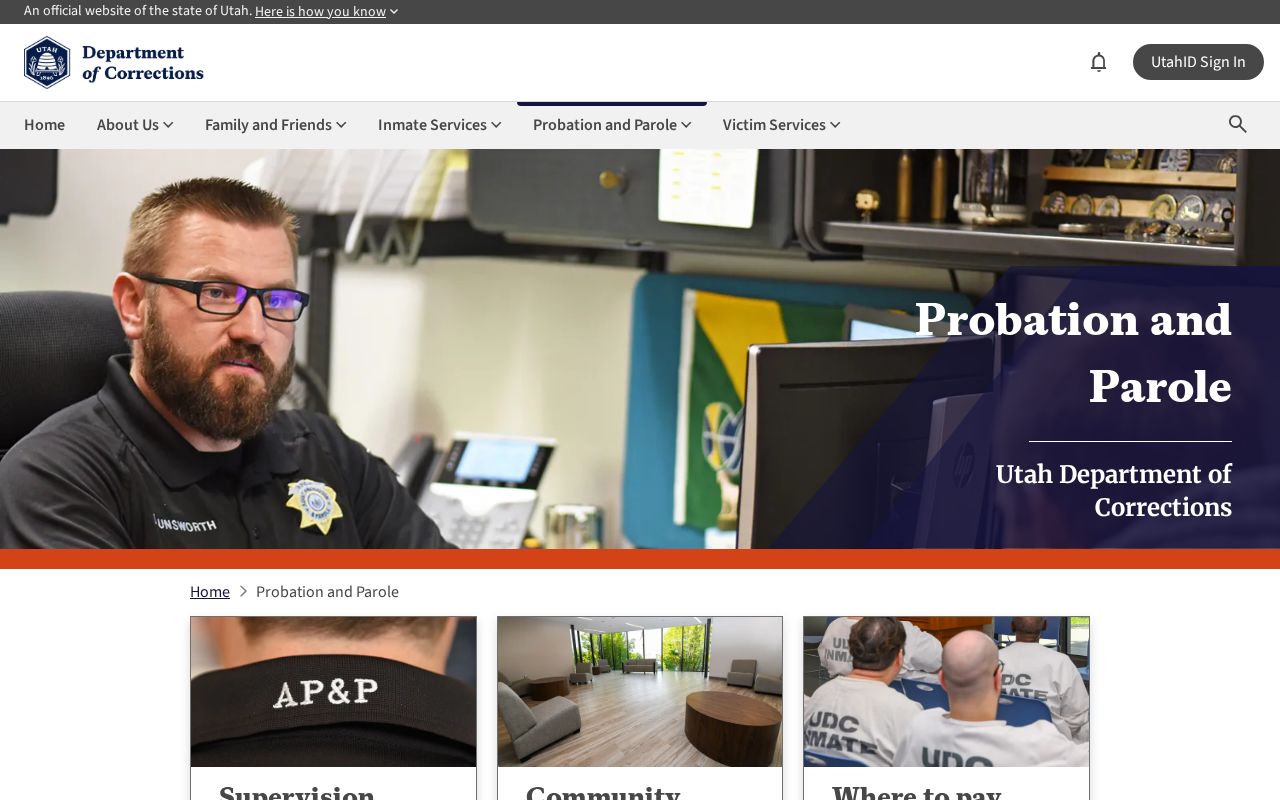
That overlap is why direct confirmation matters more than an assumed regional boundary.
Note: UDC also lists the Adult Probation and Parole Division at 801-545-5908 for agency-level routing.
Garfield County Parole Decisions
AP&P does not decide when a state prisoner receives parole. That power belongs to the Utah Board of Pardons and Parole under Utah's parole framework. The Board's hearing and decision search accepts first and last name, offender number, or a date range. It can return upcoming hearings and previously published decisions. Known aliases may also be found.
Read each result by event type. An original hearing considers possible release before sentence expiration. A rehearing schedules later review. A violation hearing follows an alleged breach after parole. A rescission hearing can take away a release date already granted but not yet reached. None of those labels, standing alone, proves that the person physically left prison. The Board says decisions usually take two to six weeks after a hearing, so the hearing day is not the decision day.
For a person already out, compare a prior Board order with the current UDC legal status. “Parolee” confirms release into supervision. A termination or expiration record concerns the later end of the sentence. Under Utah Code § 77-27-9, parole generally cannot begin before the minimum term unless the Board makes the required findings through the statutory process. Parole eligibility is not a guaranteed release date.
Garfield County Supervision Warrants
UDC says AP&P agents may request an arrest warrant when a supervised person absconds, and fugitive teams may seek that person. Absconding is an alleged failure to remain in contact or comply with supervision. It is not a new conviction. No official public statewide AP&P absconder list was found in the source review. The Garfield County Sheriff warrant page provides a local entry point, but the form hands the query to Utah's statewide warrant data. Courts feed information through UCJIS, and accuracy depends on timely entry and removal. A positive result can support the conclusion that a person outside jail is wanted. A negative result cannot prove supervision ended or guarantee that no warrant exists.
The successful official capture shows the Garfield-branded warrant handoff and its limits.
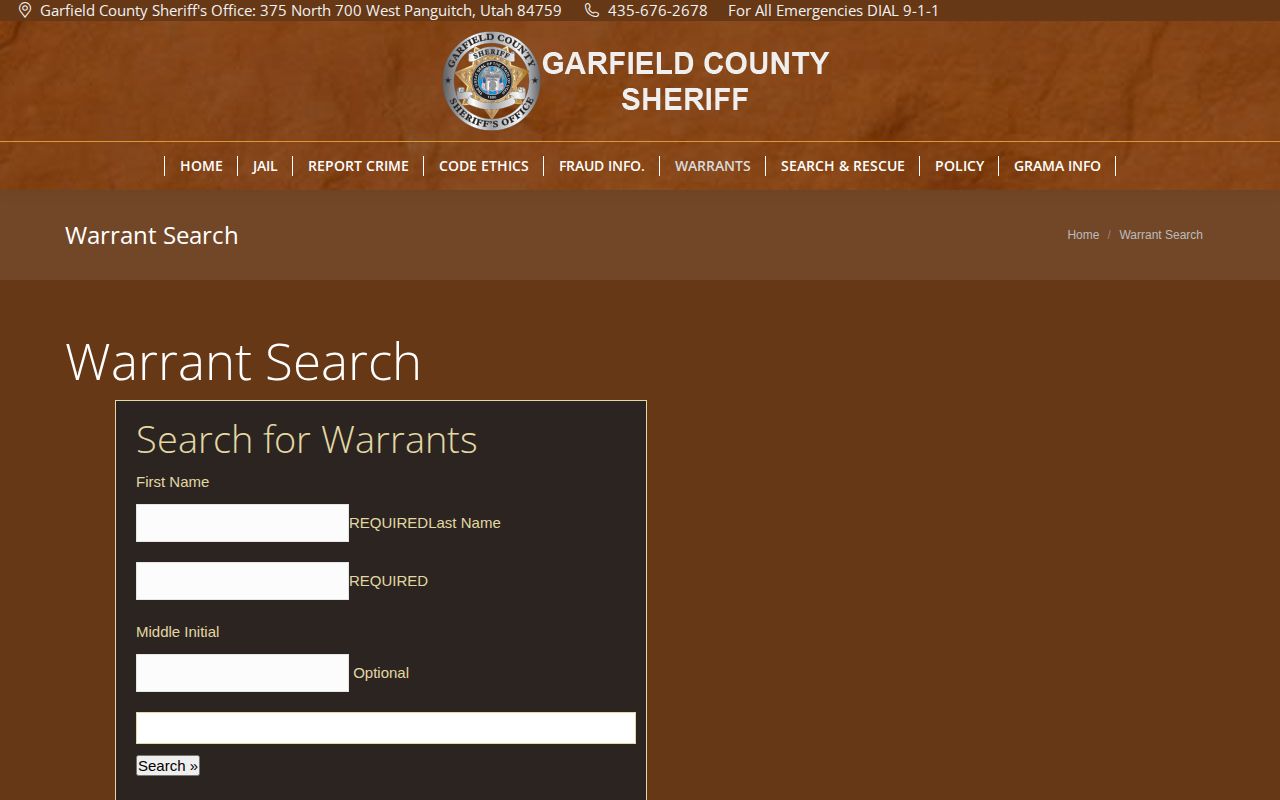
Use the result with direct AP&P confirmation and the court record, not as a substitute for either source.
Note: A warrant concerns legal status after release; it does not establish the date or manner of the earlier jail or prison release.
Garfield County Supervision Conditions
Conditions are set through the court, Board order, and supervision plan. UDC identifies common areas such as reporting, residence, travel, curfew, assessment or treatment, restitution, fines, community service, and case planning. The exact terms belong to the individual record. A general list should never be treated as proof that every condition applies to one Garfield County parolee or probationer.
An alleged violation does not always have the same result. AP&P may investigate and seek a warrant. In a parole matter, the Board can hold a violation hearing, dismiss allegations, recall a warrant and reinstate parole, or set disputed claims for an evidentiary hearing. A court controls probation consequences. Current legal status, the relevant order, and the supervising agency's record are stronger evidence than rumor or an old online entry.
Garfield County Reentry Programs
Garfield County Jail also has a documented treatment and reentry setting. The UDC county-jail program report describes the 42-seat Dare to Soar intensive outpatient program and After Care. It reports 63 successful Dare to Soar transitions in fiscal year 2024. Other listed work includes Success After Prison, relapse prevention, life skills, parenting, and cognitive behavioral programs.
Those facts provide local context, not an individual record. The programs are not proof that a named person took part, completed treatment, earned a time cut, or received parole. Eligibility and participation must come from the person's UDC, jail, court, or Board file. Still, the program list helps explain why release planning and supervision may include treatment, case planning, or continued support after a Garfield County custody stay.
Property After Garfield County Release
Ordinary booking property should be addressed with Garfield County Jail first. The sheriff publishes a separate personal-property process for unclaimed evidence, safekeeping items, and found property held more than 90 days. That page names Sgt. Tom Talbot at 435-676-1126, but it is not a routine release-property policy.
Do not apply the published 90-day language to every person leaving jail. Ask the jail whether normal booking property is ready, whether another unit holds it, and what identification or authorization is needed. Use the unclaimed-property contact only when staff direct the inquiry there. Property status also says nothing about parole, probation, a warrant, or sentence discharge.
Ending Garfield County Supervision
Physical release and the end of supervision are separate milestones. A parolee remains under the state sentence after leaving prison. A probationer remains bound by the court order after leaving jail or beginning community supervision. Completion requires a termination, expiration, or court discharge reflected in the responsible agency's records.
UDC's live search is designed for current supervision, so a fully discharged person may stop appearing. Preserve the offender number and case number, then check the Board decision archive and sentencing-court history. If those sources do not settle the issue, make a focused GRAMA request for existing legal-status, parole, termination, or expiration records. Ask for records rather than a custom explanation. A gap in a live database is never enough to declare supervision complete.