
Garfield County Scheduled Release Dates
A projected or scheduled date is a future marker. It is not the same as the time a person actually walks out. For a Utah state prisoner, the public term closest to the common search phrase “projected release date” is UDC's “Parole/Expiration Date” or its release-day wording, “Parole/Release date.” A parole date means release from prison into supervision. An expiration date concerns the end of the controlling term. Those events have different legal effects.
A Board order may grant a date but still attach a release plan or other contingency. Conduct, a new case, or another issue can lead to a rescission hearing before that date arrives. Release processing also takes place after the legal authorization. For Garfield County Jail, a court order and the actual jail departure may have different timestamps. The jail record is the better source for the physical exit.
Garfield County Release Date Paths
The right source follows the legal system, not merely the building. Garfield County Jail can hold a local detainee, a county-sentenced prisoner, or a state prisoner housed under a UDC contract. A transfer out of the Panguitch jail can remove a name from local view without releasing that person to the community. UDC says almost all state prisoners held in contract county jails are taken to Utah State Correctional Facility for release.
| Custody type | Date source | What to confirm |
|---|---|---|
| Pretrial county detainee | Court and Garfield County Jail | Whether an order exists and whether jail processing is complete |
| County-sentenced inmate | Sentencing court and sheriff release record | Sentence, time served, hold, and actual release time |
| UDC state prisoner | UDC search and Board decision | Parole/Expiration Date, legal status, and release conditions |
| UDC contract prisoner | UDC and Board records | Whether leaving Garfield was transfer or true release |
| Federal prisoner | Federal Bureau of Prisons | Federal release date and custody location |
A pretrial detainee does not have a sentence-based release date. Bond, dismissal, a new court order, a detainer, or case progress can alter custody. Never turn an upcoming hearing into an assured exit date. For state cases, a Board hearing date is likewise a review date, not a release date.
Garfield court records add the legal context, but they must be searched in the correct court. Sixth District Court handles felony and class A misdemeanor cases. Garfield County Justice Court handles many class B and C misdemeanor and infraction matters filed by the sheriff, Highway Patrol, or wildlife officers, while Panguitch City Justice Court is a separate court identity. A docket may show bond action, dismissal, judgment, sentence, credit for time served, or probation. It usually does not show the minute jail staff completed a departure. Match the court entry to the sheriff's booking and release record, and check for another hold before treating an order as the actual release time.
Find Garfield County Projected Release
Gather the full name, date of birth, booking or SO number, UDC number, and court case number when available. These identifiers separate people with similar names and help the agency find an existing record. The UDC Offender Search is the first public stop for a sentenced state prisoner. It accepts a UDC number or a name with at least one letter in both the first and last fields.
- Identify whether Garfield County, UDC, or another authority controls the custody.
- For UDC custody, search the offender number and read legal status, custody location, sentence, Board hearing, and Parole/Expiration Date together.
- Open the Board's hearing and decision search to distinguish a granted parole date from a hearing or rehearing date.
- For county custody, call Garfield County Jail and review the correct district or justice court case.
- After the expected date, confirm the actual event through the sheriff or UDC status record.
UDC public information includes legal status, offender number, custody location, offenses and sentence length, Board hearing date, Parole/Expiration Date, sentencing court, sentencing date, case number, and a prison photograph. The official public-information page shows the supported fields and the state GRAMA route.

The capture reinforces that Utah uses “Parole/Expiration Date,” not a universal web field called “projected release date.” A UDC result covers people currently under state supervision. It excludes a person awaiting trial or sentence in county jail, and a fully discharged person may no longer appear. The broader Garfield County release-record path explains how court and agency records fill that gap.
Utah Release Date Terms
This channel sweep found no verified official UDC field named “projected release date.” Precise Utah terms prevent major errors. A parole date is the date set for conditional release into supervision. An expiration date marks the end of the controlling term. A termination may end a sentence early through Board authority. A hearing date marks review, while a tentative hearing date is only an estimated month and year for that review.
- Parole date
- The ordered date for release from prison into AP&P supervision.
- Expiration date
- The end of the controlling sentence term.
- Termination
- An authorized early end to the sentence or supervision.
- Tentative hearing date
- An estimated review period, not an estimated release date.
- Rescission
- Board review that may withdraw a granted date before release occurs.
The Board initially gives a tentative hearing month and year. Precise scheduling begins a few weeks before that point, and missing reports, pending charges, or scheduling capacity may move the hearing. The Board does not decide a case on the hearing day. Its victim information says decisions usually take two to six weeks. A hearing search result should therefore never be published as the date someone will leave custody.
Garfield County Earned-Time Rules
Utah is an indeterminate-sentencing state. A court generally imposes a statutory range, and the Board decides the actual prison duration within its authority. Utah Code § 77-18-111 governs how the indeterminate term is constructed. The Board combines concurrent and consecutive sentences into a total minimum and maximum, then considers the guideline date, presentence report, offense, treatment needs, and other relevant material. No current source reviewed supports a blanket rule that every Utah prisoner, or every violent offender, must serve 85 percent of a fixed sentence. That formula should not be imported into Garfield County records. Utah can impose offense-specific minimums. Section 77-27-9 generally bars release before the minimum unless the Board makes specified findings about mitigating circumstances and public safety after a noticed, recorded hearing.
Utah's main prison earned-time authority is § 77-27-5.4. The UDC earned-time program page says successful completion of an approved case-action-plan program produces a mandatory four-month cut for each of up to two programs, for a maximum mandatory reduction of eight months. The Board may award an added discretionary reduction.
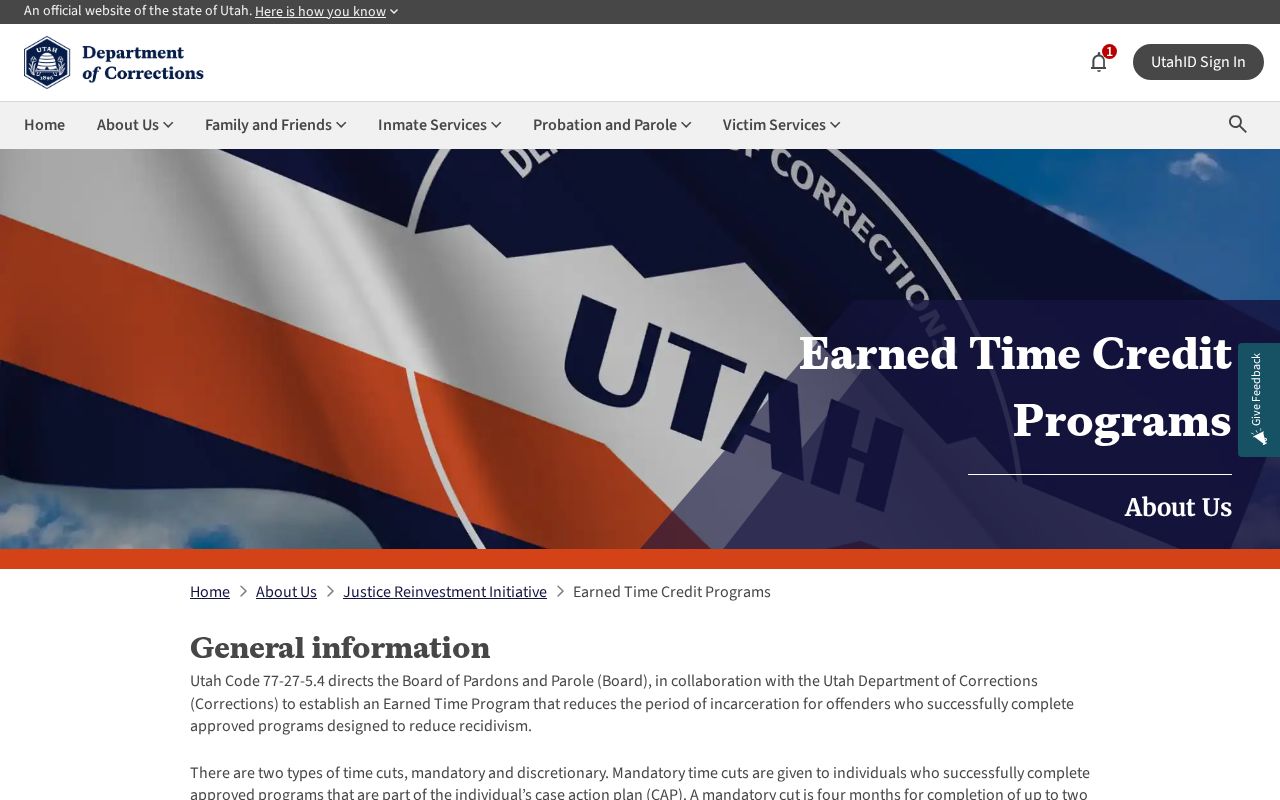
The official capture ties earned time to approved program completion and Board administration, not a daily county-jail good-time formula. A reduction can be unavailable when too little time remains for the full cut and transition work, when no current release date exists, when a release contingency is unmet, or for life without parole and a Board order to serve life. A rescission process may also forfeit earned time. UDC starts the mandatory or discretionary time-cut information; the Board states that it does not initiate those cuts.
Why Garfield Release Dates Change
A future release date rests on the sentence calculation, Board action, custody behavior, and any conditions that must be met. One record can change while another has not yet updated. Read the latest order and current legal status together, then ask the record owner to reconcile a conflict.
| Factor | Possible effect | Best source |
|---|---|---|
| Board decision | Grants, delays, denies, or terminates release | Published Board decision |
| Earned-time adjustment | Moves an existing date when statutory terms are met | UDC and Board record |
| Program contingency | Delays release until a required step is complete | Board order and UDC status |
| Discipline or rescission | May withdraw a date before release | Board rescission decision |
| New case or hold | May keep the person in custody or move authority | Court and holding agency |
| Sentence calculation | Corrects the controlling minimum, maximum, or expiration | UDC records |
A detainer is a request by another authority to hold or transfer the person. It can prevent a planned community release even when the first case appears complete. Pending charges can also delay a hearing. For a county inmate, a fresh court order may change bond or sentence status. For a state prisoner, parole remains a Board decision rather than a simple arithmetic result.
Note: Departure from Garfield County Jail can be a transfer to UDC, another jail, or another authority rather than release to the community.
Confirm Garfield County Release Dates
Before the expected date, check the newest UDC status and Board decision. A family member or other permitted user may try Utah VINE for a custody-change alert, but VINE should remain one layer of confirmation. The official sources do not promise that every Garfield County Jail event is present or current. A transfer alert means movement, not discharge.
For a county case, call Garfield County Jail at 435-676-2678 and ask staff to distinguish present custody, community release, and transfer. Then request the release record when durable proof is needed. For a state case, compare the post-date UDC legal status with the controlling Board order. If a person is fully discharged and no longer in the current-supervision search, request the existing status history through UDC GRAMA.
The Garfield County VINELink check explains registration and alert limits. Save the wording and time of any notification. An alert, court order, roster disappearance, or future date should be confirmed with the agency responsible for the actual custody event.